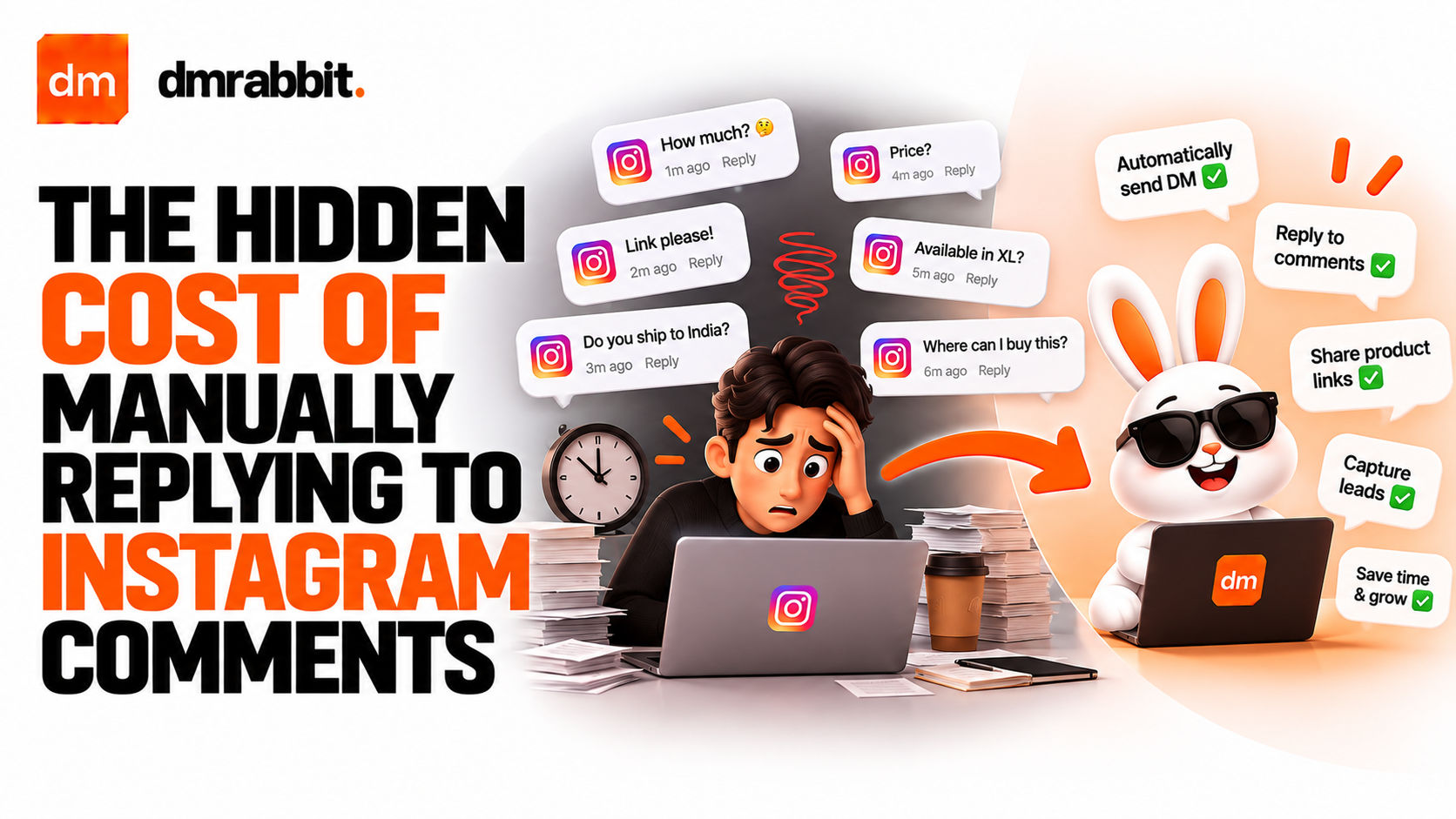
Manually replying to Instagram comments feels free because no invoice ever shows up for it. But time spent checking notifications, typing the same answer for the fortieth time, and circling back to comments you missed earlier in the day is a real cost, it just gets paid in hours instead of money, which makes it easy to underestimate.
The math most people never actually do
Say a business gets 30 comments a day that need a reply, a modest number for an active account. Reading each comment, deciding on a response, and typing it takes roughly a minute on a good day, longer if it involves checking a price list or looking something up. That's 30 minutes a day, conservatively, spent on replies alone, not counting the time spent noticing which comments need a response in the first place.
Thirty minutes a day comes out to roughly 3.5 hours a week, or around 180 hours a year. That's more than four full 40-hour work weeks spent entirely on typing variations of the same answers, price, availability, booking, over and over.
The cost that's harder to measure: the ones that got missed
The time spent is only part of it. The bigger cost is usually invisible, comments that came in while you were doing something else and never got a reply at all, or got one hours later once the person had already moved on. There's no line item for a lost sale that never showed up as a completed order, which is exactly why this cost tends to go unnoticed even as it happens.
A comment asking "price?" that sits unanswered for six hours isn't neutral, it's a small, silent loss each time it happens, and on a busy week it happens more often than most business owners realize.
Why this compounds as an account grows
The math above assumes a fairly modest comment volume. A single post that performs better than expected, a viral Reel, a well-timed giveaway, can generate that same 30-comment day's worth of replies in an hour. Manual reply capacity doesn't scale with a good week, it stays exactly the same, which means the accounts with the most upside are often the ones losing the most to slow replies at exactly the moment it matters most.
What automation actually changes here
None of this is an argument that manual replies are bad or lazy, they're simply expensive in a currency that doesn't show up on a balance sheet. Automating the repetitive first response, the price checks, the booking requests, the hours questions, doesn't eliminate the need for a person entirely. It removes the 180-hours-a-year version of the problem and the invisible missed-comment version alongside it, while leaving genuinely complex conversations for an actual person to handle.
A rough way to check your own numbers
Count how many comments you personally reply to in a normal day, and roughly how long each one takes including the time spent noticing it needs a reply. Multiply by the number of days you're actively managing the account. Most people are surprised by the total once they actually add it up, since the cost is spread thin enough day to day to feel invisible until it's counted all at once.
FAQ
How much time does the average small business spend on Instagram comments?
It varies widely, but even a modest 30 comments a day at roughly a minute each adds up to around 180 hours a year, before accounting for comments that get missed entirely.
Is the real cost of manual replies just time, or something else too?
Time is the visible part. The less visible cost is missed or delayed replies to genuine buying intent, which doesn't show up as an expense but does show up as lost revenue.
Does automating comment replies eliminate the need for manual involvement entirely?
No. It removes the repetitive, high-volume first response, freeing up time for the more complex or higher-value conversations that still benefit from an actual person.
For a full comparison of Instagram automation tools, see our complete 2026 guide.
Curious what automating this would actually save you? Start free with dmrabbit.